Natural Resources Risk & Action FrameworkNatural Resources Risk & Action Framework
  • About
  • Phases
    • Phase 1: Prepare
    • Phase 2: Assess
    • Phase 3: Commit
    • Phase 4: Act
    • Phase 5: Scale & Exit
  • Tools & Case Studies
  • Contact
  • About
  • Phases
    • Phase 1: Prepare
    • Phase 2: Assess
    • Phase 3: Commit
    • Phase 4: Act
    • Phase 5: Scale & Exit
  • Tools & Case Studies
  • Contact

Phase 2: Assess

  • Home
  • Phase 2: Assess

[xyz-ihs snippet=”NRAF-Sm-Access”]

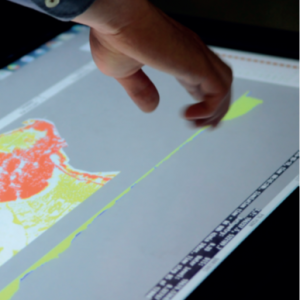
NRAF’s Phase 2, which is often integrated with elements of the Prepare phase, consists of a situation analysis, assessing natural resource risks, developing scenarios and options for risk mitigation measures, determining costs and benefits, further shaping the emerging partnership, elaborating the roadmap, and deciding on possible solutions, among others.

Selected key questions for Phase 2

  • Do we have a good understanding of relevant natural resource risks and mitigation options?
  • Have we addressed stakeholder concerns and questions?
  • What are the costs and benefits of the options identified?
  • Are affected stakeholders contributing to the design and implementation of the initiative?
  • Have all stakeholders contributed to articulating and have a common understanding of the initiative’s goals?
  • Have we researched best practices that we can adopt, adapt, or learn from?

Example

Assessing water risks in Tanzania: The “Usa River Partnership” for water stewardship is conducting a study in consultation with all relevant stakeholders, including upstream and downstream villages, to ensure an accurate understanding of water risks and options for water risk mitigation measures, including a costs and benefits analysis, to develop a Water Risk and Action Plan (WRAP). This WRAP will be validated by a kick-off stakeholder meeting and signed by each partners. See more on the tools here: direct link to Phase 2 in the WRAF.

Complementing the NRAF with the Collective Leadership Compass

The Compass Dimensions and Aspects that are most commonly associated with NRAF Phase 2: Assess

  • Collective Intelligence: diversity – foster diversity in thought, viewpoints, background, and experiences
  • Humanity: empathy – embrace the perspectives of others and open gateways for reconciliation
  • Future Possibilities: future orientation – focus on potential or opportunities and drive change for the better
  • Innovation: creativity – nourish sources of creative energy and collective generation of ideas
Learn more here.

[xyz-ihs snippet=”compass-graphic-assess”]

Tools & Case Studies

  • 3Di (2014)
    3Di (2014)

    Identify key players and all other partners to be considered to make the partnership a success

    Read more
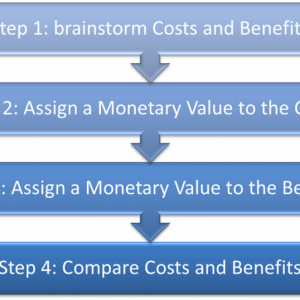
  • Cost Benefit Analysis Guidance
    Cost Benefit Analysis Guidance

    An outline of the main steps to execute a cost-benefit analysis.

    Read more
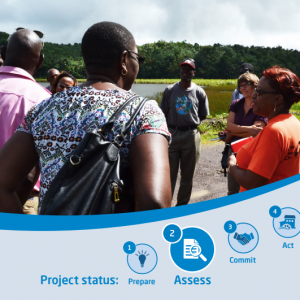
  • Grand Etang
    Grand Etang Forest Reserve, Grenada

    This partnership intends to improve the management of the Grand Etang Lake as a water reservoir for southern Grenada’s drinking water supply, with the additional benefit of an eco-friendly…

    Read more
  • Lusaka Water Security Initiative
    Lusaka Water Security Initiative (LuWSI) (2017)

    LuWSI is a multi-stakeholder collaboration system inspired by and working towards the vision of water security for the residents and businesses of Lusaka.

    Read more
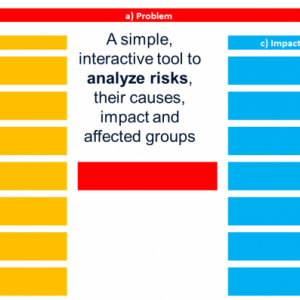
  • Problem Butterfly
    Problem Butterfly

    Interactive brainstorming tool to jointly analyse risks, their causes, impact and impacted groups.

    Read more
  • Risks and Opportunities Assessment
    Risks and Opportunities Assessment

    Identify typical risks and damages resulting from water impacts in the area. For the risk assessment, hazards as well as impacts need to be identified for all elements defined…

    Read more
  • Imarisha Naivasha Water Stewardship
    Stakeholder / Institutional Analysis

    Identify key players and all other partners to be considered to make the partnership a success

    Read more
  • Sustainable Water Management in Usa River
    Sustainable Water Management in Usa River (SUWAMA-Usa) (2017)

    The Sustainable Water Management in Usa River (SUWAMA-Usa) is a partnership with the objective to improve water security at the sub-catchment level.

    Read more
  • Value Proposition Tool
    Value Proposition Tool

    Positioning statement that explains what benefits the stewardship provides to different stakeholders and how it does it uniquely well.

    Read more
  • Water Risk and Action Plan
    Water Risk and Action Plan

    Project planning. Mapping out a roadmap of activities.

    Read more

Leave A Reply Cancel reply

Your email address will not be published. Required fields are marked *

Developed in partnership with…

Navigation

  • About
  • Phases
    • Phase 1: Prepare
    • Phase 2: Assess
    • Phase 3: Commit
    • Phase 4: Act
    • Phase 5: Scale & Exit
  • Tools & Case Studies
  • Contact

CEO Water Mandate


[google-translator]

About the Mandate

  • Mission & Governance
  • Strategic Partners
  • Working Groups
  • FAQs
  • News

About the UN Global Compact

  • The Ten Principles
  • Sustainable Development Goals
  • Our Participants
  • Our Work
  • What You Can Do
  • Career Opportunities
  • Submit Your COP
Natural Resources Risk & Action FrameworkLogo Header Menu
  • About
  • Phases
    • Phase 1: Prepare
    • Phase 2: Assess
    • Phase 3: Commit
    • Phase 4: Act
    • Phase 5: Scale & Exit
  • Tools & Case Studies
  • Contact